North Dakota: Assistive Technology Supports Safer Aging at Home
An assistive technology consultant, Shannon Bozovsky, demonstrates a range of tools designed to help with daily living.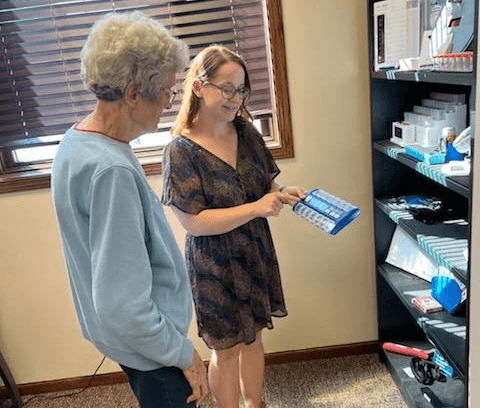
April 22 is Assistive Technology Awareness Day! Assistive Technology (AT) plays a very important role in supporting independence for people with disabilities. AT includes any device, equipment, or system that is used to enhance functional abilities of people with disabilities.
Across 56 US states and territories, AT programs transform access to life-changing technology. These statewide, comprehensive, consumer-driven programs help people of all ages and abilities test and get access to the AT tools they need to live, learn, work, and thrive—wherever life takes them.
Check out M’s story from the North Dakota Assistive Demonstration Center:
Planning Ahead: Assistive Technology Supports Safer Aging at Home
M and her daughter-in-law were experiencing growing stress related to M’s physical and cognitive changes. With early signs of dementia, they decided to get ahead of the challenges and begin planning for ways to support M’s independence and safety.
At the North Dakota Assistive Demonstration Center in Fargo, an assistive technology (AT) consultant, Shannon Bozovsky, demonstrated a range of tools designed to help with daily living. These included the RAZ Memory Cell Phone, smartphone accessibility features, bed and bathroom organization tools, bookshelf door decals, elopement tracking devices, contrasting dishes to support eating, and locked medication dispensers. After the visit, M’s daughter-in-law shared her appreciation in a follow-up message: “Thank you so much for heightening our awareness to so many resources out there to manage day-to-day life. Appreciate all you do!”
Want to learn more about what State and Territory Assistive Technology programs do to improve access, expand the availability, and raise awareness of AT for people with disabilities and older adults? Visit CATADA, the Institute for Community Inclusion’s central hub for data, best practices, consumer stories, and resources focused on improving access to AT as reported by State and Territory Assistive Technology Programs.